Because one ad apparently isn't enough to spread vile, stateside heterosexism to the unsuspecting, burger-crazy indios, they had to make a second ad of rivalling stupidity. As if this country needed more brain damage.
But hey, you can be cheap, heterosexist cretins if you like, KFC. Eat your fucking hearts out. In private. Don't feed it to people. You're not authorised to poison us. (That's somebody else's job.) And, even if I were to believe in this appalling misogyny, what the fuck does it have to do with the fucking burger? Sick.
PS: You disappoint me, KC. You disappoint gender sensitivity. You disappoint human decency.
Showing posts with label gender. Show all posts
Showing posts with label gender. Show all posts
Sunday, 2 December 2012

Sunday, 18 November 2012
Well, someone obviously wants to take the path of Colt .45 in making the stupidest, most sexist, most homophobic commercials
Thank you, KFC, for making Philippine advertisement a stupider, more sexist place for men to feel awkward about their honest-to-god intimacy. Not to mention, you've just estranged an entire sex with that stupid tagline. Man up? Really? In 2012? This is stupid and absurd, KFC. Really.
These guys have probably never watched a real football match in their entire lives or met a woman with a titanic appetite for flesh. Human up, wankers.
Thursday, 3 May 2012
On Miriam Quiambao and ignorant, violent cretins
I support Miriam's freedom to express her beliefs, no matter how bigoted I think they are. If she thinks being a "true" Christian is all about following biblical morality, so be it. If she thinks all the absurd and barbaric customs in the Bible are God's absolute "Truth", so be it. She can have these beliefs for herself if she wants to. But, they are hers; other people don't have to share it, and we are not required to respect them, especially when they don't make any sense, or when they incite violence or espouse inequality.
Miriam's sugar-coated homophobia is only a speck of a larger problem: the rampant, barbaric homophia in our country. Look to any article where Miriam Quiambao's homophobic comments are discussed and you will find hordes of ignorant, violent cretins who call out for LGBT genocide.
I'm sure there were some people who wanted her dead for her repetitive, hypocritical tweets. But, only from the anti-LGBT wall have I seen self-identified "human beings" calling for the death of their fellowmen just because they are not straight. And they call themselves Christians? Jesus must be very proud.
In response to: theguywithablog.blogspot.com
Image from: filipinofreethinkers.org
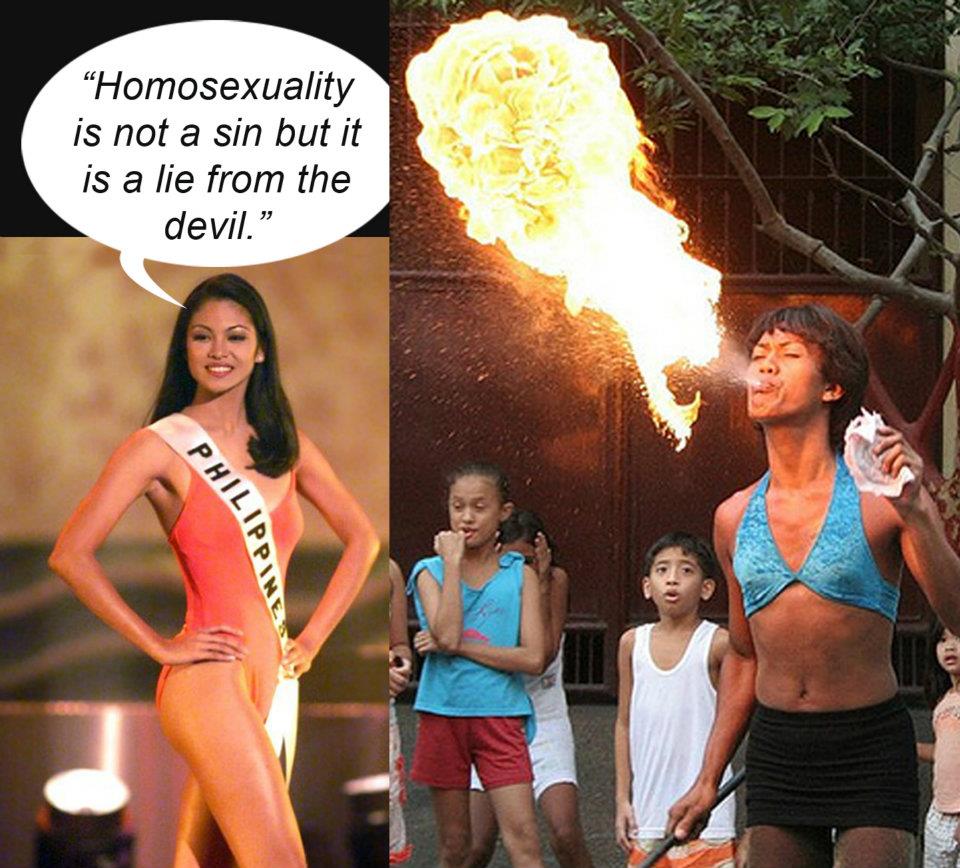
Miriam's sugar-coated homophobia is only a speck of a larger problem: the rampant, barbaric homophia in our country. Look to any article where Miriam Quiambao's homophobic comments are discussed and you will find hordes of ignorant, violent cretins who call out for LGBT genocide.
I'm sure there were some people who wanted her dead for her repetitive, hypocritical tweets. But, only from the anti-LGBT wall have I seen self-identified "human beings" calling for the death of their fellowmen just because they are not straight. And they call themselves Christians? Jesus must be very proud.
In response to: theguywithablog.blogspot.com
Image from: filipinofreethinkers.org
Friday, 20 January 2012
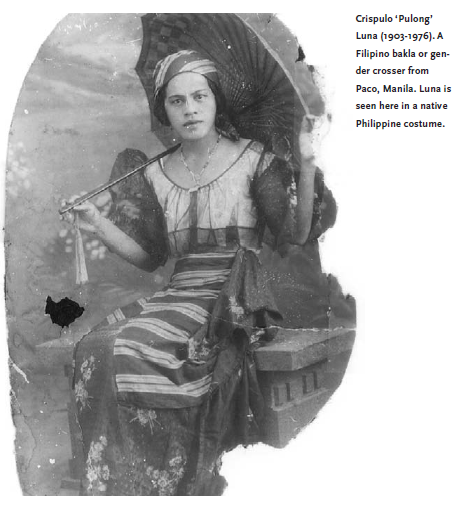
Gay beauty pageants and early morning conversations on politically correct terms (or lack thereof) in the Tagalog language

One of my dear friends, via text, so early in the morning: "Anó ang politically correct term ng baklâ?"
Me: No exact word, but roughly: effeminate homosexual.
Her: No, in Tagalog.
Me: Ah. Walâ because we are currently an unsophisticated people. But Tagalog used to have one: bayog-ín. It is archaic, but some scholars have revived its usage.
Note, though, that baklâ is largely pejorative whilst bayog-ín is neutral-to-positive. The latter is obviously older and comes from a more sophisticated past.
Addendum: There is also binabaé (for boys) and binalaki (for girls), but these are in reference to transgender, not homosexuality.
Her: Oh, okay. Salamat. I was asking kasí I saw a news clip kanina when I was on the bus going home. And Pinky Webb said 'mga badíng'. And I found it off-key.
Me: Yes, it's always off-key. It's roughly the equivalent of "faggot" or "nigger" on American television. They would never openly say it on air. Dito kebs kasí tangá tayo. Ha ha!
Her: I know! She was talking about a gay beauty pageant, BTW.
Me: Ah, gay beauty pageants. Where gay men are always assumed to be the same as transgender.
Her: I would post this conversation on Facebook.
Me: I WAS THINKING THE SAME THING!
Me: I actually get up at around 10:30, but I read your message, and couldn't go back to sleep unless I answered you. Damn you!
 |
| Image: http://www.iias.nl/nl/35/iias_nl35_13.pdf |
Thursday, 1 December 2011
Why are we so obsessed with who's gay?
Perhaps because we are a hapless bunch, insecure of our own sexual and/or gender identities? Perhaps because we aren't amongst the most comfortable when it comes to the topic of sex, nor amongst the most educated? In fact, we're so ignorant that we've piled up everything we can't define about gender and sexuality into one word: baklâ.
Hapless, indeed, to have only one word (a bad word, not to mention) for everything else we are unwilling to introduce to decent society.
Hapless, indeed, to have only one word (a bad word, not to mention) for everything else we are unwilling to introduce to decent society.
Wednesday, 9 November 2011
'Wag kang haharang-harang sa daan ko.
Lalaki ako. Mahal ko ang titi ko. Sapat na 'yun para maging lalaki. Hawak ko ang kasarian ko, hindi mo o ninuman. Iiyak ako kung gusto ko, at uurong ako sa inuman kung kailan ko gusto.
Desisyon ko ring hindi mag-asawa kung gugustuhin ko; hindi ito kabasawan sa pagkalalaki ko. Kung babae man o lalaki -- o pareho -- ang hilig ko ay wala na kayong pakialam dun. Sino'ng sira-ulo bang may sabi na ang lalaki ay para lamang sa babae?
Wala nga palang kasarian ang tela. Lalaki pa rin ako kahit ano'ng isuot kong damit. Hindi malalaglag ang bayag ko kapag nagpalda ako o headband; kaya pa rin kitang upakan (at kaya ka ring upakan ng lola ko -- ang kakayahang umupak ay walang kinalaman sa kasarian o edad ng isang tao).
Hindi kita mapipigilang tawaging akong bakla kung 'yun lang ang konseptong kaya ng makitid mong utak. Wala rin akong pakialam kung utos ng relihiyon mong bano na kamuhian mo ako. 'Di ko kasalanang tanga ka. Basta, ako, lalaki ako -- isang taong pinanganak na may titi, at nagmamahal sa kanyang titi. Kung 'di mo ako kayang igalang, bahala ka, buhay mo 'yan. 'Wag mo lang akong pagkaitan ng karapatan kong pantao para pagharian ang sarili kong kasarian at pagkakakilanlan. 'Wag kang haharang-harang sa daan ko.

Siya nga pala, kahit sino pwedeng uminom ng Colt .45, mapababae o mapalalaki.
Desisyon ko ring hindi mag-asawa kung gugustuhin ko; hindi ito kabasawan sa pagkalalaki ko. Kung babae man o lalaki -- o pareho -- ang hilig ko ay wala na kayong pakialam dun. Sino'ng sira-ulo bang may sabi na ang lalaki ay para lamang sa babae?
Wala nga palang kasarian ang tela. Lalaki pa rin ako kahit ano'ng isuot kong damit. Hindi malalaglag ang bayag ko kapag nagpalda ako o headband; kaya pa rin kitang upakan (at kaya ka ring upakan ng lola ko -- ang kakayahang umupak ay walang kinalaman sa kasarian o edad ng isang tao).
Hindi kita mapipigilang tawaging akong bakla kung 'yun lang ang konseptong kaya ng makitid mong utak. Wala rin akong pakialam kung utos ng relihiyon mong bano na kamuhian mo ako. 'Di ko kasalanang tanga ka. Basta, ako, lalaki ako -- isang taong pinanganak na may titi, at nagmamahal sa kanyang titi. Kung 'di mo ako kayang igalang, bahala ka, buhay mo 'yan. 'Wag mo lang akong pagkaitan ng karapatan kong pantao para pagharian ang sarili kong kasarian at pagkakakilanlan. 'Wag kang haharang-harang sa daan ko.
Siya nga pala, kahit sino pwedeng uminom ng Colt .45, mapababae o mapalalaki.
Tuesday, 11 October 2011
National Coming Out Day
Today is National Coming Out Day. I am coming out to all of you in behalf of those who cannot.
Let it be known that I am gay. And lesbian. And trans, queer, pan, and bi. Also intersexual, asexual, pomosexual, questioning, unlabelled, and undecided. I am everything this intolerant, ignorant society cannot accept. But I am a human being and I shall not stand by as others tell me I do not deserve the same rights that they enjoy.
I am here. I will not be bullied. I deserve the same humanity.
If you can, I hope you can come out with us, too. For equality and awareness, may we achieve victory in doing so.

Let it be known that I am gay. And lesbian. And trans, queer, pan, and bi. Also intersexual, asexual, pomosexual, questioning, unlabelled, and undecided. I am everything this intolerant, ignorant society cannot accept. But I am a human being and I shall not stand by as others tell me I do not deserve the same rights that they enjoy.
I am here. I will not be bullied. I deserve the same humanity.
If you can, I hope you can come out with us, too. For equality and awareness, may we achieve victory in doing so.
Friday, 23 September 2011
Reality disagrees with the CBCP... as usual.
As if President Aquino's halfbaked support for LGBT rights wasn't sad enough, a certain Fr Melvin Castro had to make it all worse. Here, he says: "Essentially we don't believe that same sex attracted people are discriminated upon in the Philippines. What we do not agree is for them to have marriage."
Erm, what? In what alternate universe is denying marriage equality not discrimination? In what fucked up cosmos is all the shite that gay men and women have to put up with in the Philippines not discrimination? Can somebody give this priest back his brain?
I refuse to believe that these people speak for Jesus.
Erm, what? In what alternate universe is denying marriage equality not discrimination? In what fucked up cosmos is all the shite that gay men and women have to put up with in the Philippines not discrimination? Can somebody give this priest back his brain?
I refuse to believe that these people speak for Jesus.
 |
| Fr Melvin Castro probably left his at the door |
Sunday, 5 December 2010
On equal respect and reality.
Last Saturday, I went to my first LGBT Pride March under the banner of the Filipino Freethinkers. It was worth every bit of sweat. My heart is swelling with so much pride it could shit exclamation marks. LIKE THIS!!!!!!!!
I could not be thankful enough for the multitude who came to support the cause; all the people who honked and cheered, all the people who shook hands and smiled, all the people who had cheerful thoughts in their hearts as united marchers blocked the roads. And the children! I wish we could all be like the children who asked whether Jesus truly loved gays.
Sigh.
Unfortunately, although the metropolis seems to accept LGBT with undoubted sincerity, gay men and women are still not real men and women. At least, that’s how our mainstream media sees it. In one TV journalist’s words: “…gays and lesbians are just as worthy of respect as real men and women”.
See, they respect us. Just not enough to think we’re “real”.
Apparently, it’s always just an act to them, this being non-heterosexual or non-straight. It’s always just a reaction to the normal: a by-product, nothing authentic or rooted. Masculine gays will always be just acting masculine because love for one’s own gender will always be the province of heterosexuals. Gays can’t be butch! That’s an oxymoron! Gays will always act like the sex opposite to their own.
This is because gays are not real, according to nature. Their view of nature. Not as real as the straights, at least.
But we should know better.
I am not a fan of labels or boxes. The whole idea of dichotomous identities is still foreign to me. But how ever we name ourselves, gay-straight-omni-trans-bi-nameless, we are just as real as everybody else. And we have to let others know that. There is no ‘everybody else’. No ‘other’. Just us. Just everybody.
Sunday, 5 July 2009
Holy Transgender?
Through many options for gender expression, including recognising five genders, this Indonesian community finds balance and peace, and prays to share this with the world. ["Taboo: Third Sex", NatGeo Channel, October 2008]
TRANSCRIPT OF THE VIDEO:
In many cultures, a person existing outside the two accepted genders is seen as confronting, even threatening. But gender is defined by culture. And on South Sulawesi, the Bugis believe that in addition to men, women and Bissu, there are two more. These two additional genders are made up of people who in the West would be considered transvestites.
Taboo's gender is calalai. Biologically she is female but she lives as a man.
Taboo: "I feel comfortable as a calalai. My family is also comfortable. As long as I'm a good person and I work hard, people accept me."
Abdul Rahman or Poppy is calabai. He has male genetalia but has lived as a woman since he was six years old.
Poppy: "I am not special. The Bugis culture accepts all five genders."
Taboo and Poppy join the fertility ceremony.
Because according to high priest Poangmatoa all five genders must co-exist for there to be universal harmony.
Bissu priest Poangmatoa: "There are five genders and we don't need to separate people based on their gender because everything must live in harmony."
"If one of the genders is separated, then the world will become unbalanced."
At a sacred cave, three miles from Segary(?), the Bissu begin the first stage of the blessing, an offering to the earth. The Bugis believe the universe has three levels.
Heaven where Partote(?) lives, the Middle World where humans live, and the Underworld where the Spirits live.
Poangmatoa: "We pray that everything -- animals, plants, people -- everything stays connected with each other. Not only from this village or the district, but the whole country ... the whole world is kept in balance and safe."
The second stage of the blessing is an offering to the Spirits. Because of their Bissu gender, the Bugis believe that Bissu priests can communicate with them. Poangmatoa must be possessed by a spirit from the Underworld before the fertility ritual can be completed.
"In order for a Bissu to be to be able to bestow particular blessings, they have to be able to contact the Spirit-world and part of the reason they can contact the Spirit-world is because they are male and female embodiments."
"And then the Bissu with all of those combinations of female-male spiritual powers can bestow a very strong blessing."
[end]
It is a pity that here, in the Philippines, things have been the other way around for the past 400 something years. I can only think of one force to blame. (to be continued)
TRANSCRIPT OF THE VIDEO:
In many cultures, a person existing outside the two accepted genders is seen as confronting, even threatening. But gender is defined by culture. And on South Sulawesi, the Bugis believe that in addition to men, women and Bissu, there are two more. These two additional genders are made up of people who in the West would be considered transvestites.
Taboo's gender is calalai. Biologically she is female but she lives as a man.
Taboo: "I feel comfortable as a calalai. My family is also comfortable. As long as I'm a good person and I work hard, people accept me."
Abdul Rahman or Poppy is calabai. He has male genetalia but has lived as a woman since he was six years old.
Poppy: "I am not special. The Bugis culture accepts all five genders."
Taboo and Poppy join the fertility ceremony.
Because according to high priest Poangmatoa all five genders must co-exist for there to be universal harmony.
Bissu priest Poangmatoa: "There are five genders and we don't need to separate people based on their gender because everything must live in harmony."
"If one of the genders is separated, then the world will become unbalanced."
At a sacred cave, three miles from Segary(?), the Bissu begin the first stage of the blessing, an offering to the earth. The Bugis believe the universe has three levels.
Heaven where Partote(?) lives, the Middle World where humans live, and the Underworld where the Spirits live.
Poangmatoa: "We pray that everything -- animals, plants, people -- everything stays connected with each other. Not only from this village or the district, but the whole country ... the whole world is kept in balance and safe."
The second stage of the blessing is an offering to the Spirits. Because of their Bissu gender, the Bugis believe that Bissu priests can communicate with them. Poangmatoa must be possessed by a spirit from the Underworld before the fertility ritual can be completed.
"In order for a Bissu to be to be able to bestow particular blessings, they have to be able to contact the Spirit-world and part of the reason they can contact the Spirit-world is because they are male and female embodiments."
"And then the Bissu with all of those combinations of female-male spiritual powers can bestow a very strong blessing."
[end]
It is a pity that here, in the Philippines, things have been the other way around for the past 400 something years. I can only think of one force to blame. (to be continued)
Wednesday, 10 June 2009
Adam Lambert, Bading?!
“Si Adam Lambert, bading?!?!”
That I got from a local news programme. More like tabloid, really.

A few hours ago, I was literally hearing nails on a chalkboard over 24 Oras' GHASTLY presentation of the irrelevant and unsurprising "news" of Adam Lambert's "outing". He's not "bading", you oafs. He clearly said "gay". Colloquially, "gay" denotes homosexual attraction or behaviour (though I prefer the original meaning, thank you very much). "Bading" means something else; the equivalent of "faggot" in American English.
Think about it. A newscaster could be roasted alive for saying that on air! Would it kill to have these media-men learn some civilisation; some responsible journalism? They're on air. They represent "facts". Facts should not be tainted with subjective language, much more offensive ones. Just report, Gods damn it.
That I got from a local news programme. More like tabloid, really.

A few hours ago, I was literally hearing nails on a chalkboard over 24 Oras' GHASTLY presentation of the irrelevant and unsurprising "news" of Adam Lambert's "outing". He's not "bading", you oafs. He clearly said "gay". Colloquially, "gay" denotes homosexual attraction or behaviour (though I prefer the original meaning, thank you very much). "Bading" means something else; the equivalent of "faggot" in American English.
Think about it. A newscaster could be roasted alive for saying that on air! Would it kill to have these media-men learn some civilisation; some responsible journalism? They're on air. They represent "facts". Facts should not be tainted with subjective language, much more offensive ones. Just report, Gods damn it.
Wednesday, 3 June 2009
Again With Commercial Idiocy! (follow up)
In direct relation to this, I found the videos on YouTube through another blogger with similar sentiments. Really, they should take the ads off telly. I do not mind watching rubbish, but what about the kids?
Philosophically, a real man has to be all noble and brave. But a woman can be all that, too. Seriously, a real man is any man with male reproductive organs. That is it.
More bloggers of similar opinions here, and here. (By the way, thank you enrique1982 for uploading the ads. I wish there was an option for cyber tomatoes.)
I quote:
Philosophically, a real man has to be all noble and brave. But a woman can be all that, too. Seriously, a real man is any man with male reproductive organs. That is it.
More bloggers of similar opinions here, and here. (By the way, thank you enrique1982 for uploading the ads. I wish there was an option for cyber tomatoes.)
I quote:
- Bawat commercial iba iba ang bida. Naisip tuloy ni Beans, sa kanilang apat, may “Real Men” ba talaga? At kung sukatan ba ng pagiging “Real Men?” ang beer na iniinom? Nakakatawang isipin kung gaano na kababaw ang nagiging sukatan ng isang “Real Men”.
- Who the hell came up with the concept? Who, in this age of sexual revolution, gender sensitivity and call for equality, came up with an ad that makes people take a 180-degree turn? I know all about classical conditioning and the power of the media. It may sound frivolous but it’s very powerful. Reminds me so much of the Marlboro Man. You know how its subtle depiction of a man–a cowboy romanticized–has influenced the smoking habits of millions of people? I mean, it’s subtle but it’s there. You can’t miss it. And now this?
- How should real men act then? Should they be barbaric and wild with nary a hint of softness on their person? Should they be insensitive and senseless, a narrow-minded individual who should throw his weight around and impose his will on anybody?
What kind of real man is this commercial trying to promote?
Tuesday, 2 June 2009
Again With Commercial Idiocy!
At msnbc, I heard that Heineken was rightly chided last fall for producing a commercial that managed to be stupid, sexist and an assault on our eardrums -- quite a feat considering the strong competition for such honors in the lowbrow world of beer advertising.
I feel exactly the same way for the latest series of Colt 45 commercials here in the Philippines. Let us say it again: stupid, sexist and an assault on -- not only our eardrums but more importantly -- our intelligence.

As if we needed more sexism in this world. Do we really need more of the sort that believes wiping one's glass makes you less of a man? (What, lack of hygiene makes you macho?) Or the sort that believes saying sweet things makes you unmanly? Or having an artistic eye and not a pervy one? Or wiping the excess sebum off your face? Fuck, no! No more of those dumb brutes, thank you very much. Besides, women can drink strong beer, too. Have they not been to Germany or Ireland? Machismo is so yester-century.
Eat dirt, Colt 45. I am not going to drink your fucking beer again. May the Beer Gods curse you. Amen.
PS: It seems that I am not the only blogger who thinks this way. See here.
I feel exactly the same way for the latest series of Colt 45 commercials here in the Philippines. Let us say it again: stupid, sexist and an assault on -- not only our eardrums but more importantly -- our intelligence.
As if we needed more sexism in this world. Do we really need more of the sort that believes wiping one's glass makes you less of a man? (What, lack of hygiene makes you macho?) Or the sort that believes saying sweet things makes you unmanly? Or having an artistic eye and not a pervy one? Or wiping the excess sebum off your face? Fuck, no! No more of those dumb brutes, thank you very much. Besides, women can drink strong beer, too. Have they not been to Germany or Ireland? Machismo is so yester-century.
Eat dirt, Colt 45. I am not going to drink your fucking beer again. May the Beer Gods curse you. Amen.
PS: It seems that I am not the only blogger who thinks this way. See here.
Wednesday, 15 April 2009
J. Riga reviews Bert Archer's "The End of Gay (and the death of heterosexuality)"
 Review by J. Riga: The End of Gay (and the death of heterosexuality) by Bert Archer [Doubleday Canada, 1999]
 I avoided this book for many months. It arrived in the mail from an ex who'd never read it. It had a black line across the bottom indicating it had been rescued from the obscurity of a remainder bin. The title, with its arrogant sense of finality, irritated me. Sexuality is such a sticky, shifting mess of a topic that to make grand pronouncements, especially of death and endings, suggested an author himself a little stiff. Yet, I was surprised to find that beneath the desperate marketing department title lay an optimistic label-breaking take on contemporary sexuality. The End of Gay, using a blend of self and social analysis, actually seeks to further blur lines and thwart attempts to keep sexuality in simplified identity-laden categories.
Divided into three parts, the first is largely autobiographical or based on Archer's personal observations of others and serves to loosely introduce us to his thesis. He believes that we are moving away from gay-bi-straight categories and towards a sexual pluralism free of labels, a re-articulation of the time when sexuality was divorced from a person's identity. As Archer says, "I'm not just arguing labels, I'm arguing ontology, Being itself." For him and the people he uses as examples, the categories are useless. A Catholic college friend of Archer's once claimed, "Y'know, I could see myself doin' a guy. I mean, I'm not a fag or nuthin", but y'know, if I was totally horned up, sure." This random statement was the catalyst for Archer's questioning of the neat little identity categories we have made for ourselves and the often instantaneous presumption that people like his college friend are closeted gays in need of enlightenment. He goes on to interview a man named Rafe who picked up men in straight clubs as Renee. Rafe claimed that after bringing straight men home and revealing that he too was a man "he'd only ever been turned down twice out of dozens of pick-ups." Archer, through examples, argues that the sexual straitjacket binding action to identity is loosening. While second hand sexual stories hardly amount to anything definitive, especially the end of gay, Archer's account of his own sexual expansion did what it intended, made me reassess my flippant use of sexual categorization. We all have our own little stories. Just as Archer's college friend caused confusion when he stuck a toe out of the straight box, I knew a man assumed closeted because of his feminine mannerisms. Despite consistently displaying only a sexual interest in women and denying any in men, I waited for him to come out. He still hasn't. I failed to ask myself if sometimes there really is nothing to come out about and also why femininity is always equated with a gay identity.
The second section of the book is a straightforward account of how sexual behavior and identity formation have coalesced since the 1800s into what we now know loosely as the Gay Movement. From the invention of 'homosexual' and 'heterosexual' in 1868 to today's Gay Day at Disneyland, Archer's historical presentation is lively and accessible, expanding on key events such as Oscar Wilde's trial or the Kinsey Report as opposed to theory. Cornerstone queer theorists such as Judith Butler or Eve Kosofsky Sedgewick don't make appearances. Archer also dispenses with the opaque language of academia and speaks like a well-read friend, though admittedly, his occasional "whatever" or "as far as I can tell" was a little too casual and undermined his authority as an expert. Archer concludes this section with a critique of the current Gay Movement's alleged desire to become a carbon copy of the straight community.
The last section is the most interesting and the most challenging. Archer explores the lives of people who have made difficult decisions about their sexual identities, denying the categories they initially embraced or refusing outright to take up house in any. His final analysis is that "you can expand your sexual horizon, but I'm not so sure you can contract it." One analogy Archer uses is food, which is neither an original nor a very strong one. I'm sure we've all heard the wink-wink-nudge-nudge-don't-knock-it-'til-you've-tried-it line before and the food argument is just a dressed up version of this. Archer writes, "I was remembering what my mother told me about olives "you keep eating them, and soon you begin to enjoy them. An acquired taste. The implication is that certain pleasures are learned, are worked for. They are nonetheless pleasurable for being the product of effort." Suggesting we can retrain ourselves to have a sexual interest where there currently isn't one sounds perhaps possible, but like a lot of bloody work. Archer goes one step further than the I'll-try-anything-once school and suggests we have to apply to sex something akin to the gleeful relentlessness found in prepubescent movies about sports teams. Just keep on trying 'til you succeed! A dose of old fashioned practicality seems necessary. I'm all for sexual pluralism and believe that we should explore our bodies with the same wonder we do the world. Yet the amount of time it would likely take for me to (possibly) expand my sexual preferences in any sincere, meaningful way seems like far too much of a commitment. Using his tired analogy, why eat jar after jar of olives when you're surrounded by food your already like? For some this type of sexual exploration is a meaningful pursuit, but I think the average person to whom this book is clearly directed will see it as a niche hobby along the lines of trekking to the North Pole for fun. Most people are too busy trying to find decent people of the gender or type they're already interested in to be flinging themselves at a vagina when all they want is a penis, or vice versa. For this reason, Archer's theory seems realistic only if reigned in a bit. We are moving, though at times painfully slowly, towards a greater degree of comfort and freedom with sexuality and a dispersal of the stigma attached to non-heterosexual sex acts, but these movements are counteracted by others. For example, the current media barrage of mostly stereotypical portrayals of gays, especially men, is still keeping homosexual sex acts tightly cinched to an identity, one narrowly based on marketable points; sex (Queer as Folk) and fashion (Queer Eye for the Straight Guy).
One day we may dismantle homo and hetero categories, but with gay marriage as one of the hottest political issues today it's hard to believe that 'gay' is being surpassed as a functioning category for some. Not until all or most political aspects of the straight-gay dichotomy are equalized will people turn their full attention to redefining the boxes. Archer's analysis is inspiring but premature. Gay may be aging rapidly, but it's not yet on its last legs.
Credit: http://www.geocities.com/tokyocow/endofgay1.html; J. Riga
Tuesday, 10 March 2009
Disentangling Heterosexuality from Masculinity
Does heterosexual sex make a man more masculine? Does homosexual sex feminise a man? No and no. This article tries to disentangle the "traditional" North American point of view that heterosexuality and masculinity automatically imply each other.
 Abstract: In traditional North American society, being "masculine" is often defined as (1) the opposite of being "feminine" and (2) avoiding sexual contact with other men. Recent trends in attitudes toward homophobia and masculinity, however, suggest that these traditional orientations may have begun to change in North American society. Drawing from a multiyear ethnographic study of heterosexual male college cheerleaders, I argue that associated with these changing attitudes and practices, many men are beginning to disentangle heterosexuality from masculinity. In this context, I demonstrate how avowedly "straight" men, in some instances, engage in gay sex and openly view such encounters as non-threatening to their own personal identities and public status as heterosexuals. The study carries theoretical implications for the conditions under which heterosexuality and masculinity do not imply each other and, most speculatively, when and how gay men are considered masculine.
Credit: "Disentangling Heterosexuality from Masculinity" by Eric Anderson, American Sociological Association
Read the entire paper here: http://www.allacademic.com/meta/p_mla_apa_research_citation/1/0/9/5/0/p109509_index.html
 Abstract: In traditional North American society, being "masculine" is often defined as (1) the opposite of being "feminine" and (2) avoiding sexual contact with other men. Recent trends in attitudes toward homophobia and masculinity, however, suggest that these traditional orientations may have begun to change in North American society. Drawing from a multiyear ethnographic study of heterosexual male college cheerleaders, I argue that associated with these changing attitudes and practices, many men are beginning to disentangle heterosexuality from masculinity. In this context, I demonstrate how avowedly "straight" men, in some instances, engage in gay sex and openly view such encounters as non-threatening to their own personal identities and public status as heterosexuals. The study carries theoretical implications for the conditions under which heterosexuality and masculinity do not imply each other and, most speculatively, when and how gay men are considered masculine.
Credit: "Disentangling Heterosexuality from Masculinity" by Eric Anderson, American Sociological Association
Read the entire paper here: http://www.allacademic.com/meta/p_mla_apa_research_citation/1/0/9/5/0/p109509_index.html
Monday, 9 March 2009
PLU (People Like Us)
Name: PLU [acronym], People Like Us [noun]
We have one word for this: vague. Or relative.
 First, one needs to answer who is "us"? What is "us" made up of? Can we really have people who are like us in all ways? Or if we mean just one aspect of our being, then we have many PLU groups. A single mother working as an artist who is Protestant Christian can have three PLU circles: single mothers like her, artists like her, and Protestant Christians like her. And we all know that humans can be more complicated than that. That single mother/artist/Protestant is also Danish American, a breast cancer survivor, a democrat and an animal rights activist.
Who is "us" again?
We have one word for this: vague. Or relative.
 First, one needs to answer who is "us"? What is "us" made up of? Can we really have people who are like us in all ways? Or if we mean just one aspect of our being, then we have many PLU groups. A single mother working as an artist who is Protestant Christian can have three PLU circles: single mothers like her, artists like her, and Protestant Christians like her. And we all know that humans can be more complicated than that. That single mother/artist/Protestant is also Danish American, a breast cancer survivor, a democrat and an animal rights activist.
 Who is "us" again?
Friday, 20 February 2009
Breeder
Name: breeder [noun]
Some people like to refer to heterosexualists as "breeders" stressing that the latter are defined by their capacity/duty/want to reproduce or "breed". We think this is not only unfair but a fallacy. It is absurd to think heterosexualists generally desire for offspring and homosexualists generally abstain from begetting them. Also, calling heterosexualists 'breeders' is potentially offensive as it suggests that reproduction comprises the primary use of their sexual identity.
 Remember that reproduction is a biological function. The only people exempt from this function are those who cannot successfully reproduce offspring ie: the infertile (and even there, there is some chance to reproduce). Homosexuality does not render a person infertile nor does heterosexuality promote fertility. Simply put, you do not even need a sexual identity to reproduce. For blokes, you just stick it in and the rest will follow.
Silly, silly label. Almost anybody can be a breeder.
Some people like to refer to heterosexualists as "breeders" stressing that the latter are defined by their capacity/duty/want to reproduce or "breed". We think this is not only unfair but a fallacy. It is absurd to think heterosexualists generally desire for offspring and homosexualists generally abstain from begetting them. Also, calling heterosexualists 'breeders' is potentially offensive as it suggests that reproduction comprises the primary use of their sexual identity.
 Remember that reproduction is a biological function. The only people exempt from this function are those who cannot successfully reproduce offspring ie: the infertile (and even there, there is some chance to reproduce). Homosexuality does not render a person infertile nor does heterosexuality promote fertility. Simply put, you do not even need a sexual identity to reproduce. For blokes, you just stick it in and the rest will follow.
Silly, silly label. Almost anybody can be a breeder.
Setting Things Straight (Part 2)
The second part of 'Setting Things Straight' is nigh. It is a series on the terms, names, and labels many people today use that, as we believe, need a lot of questioning before we actually use them. You are also invited to question them as much as you want, given that you put a lot of thought in it (yes, we do not allow nonsense here).
The first term/label to scrutinise is "breeder".
The first term/label to scrutinise is "breeder".
Thursday, 5 February 2009
Setting Things Straight (Part 1)
Sex refers to the male and female duality of biology and reproduction. Often, individuals of the two sexes attract one another and communicate their readiness to procreate through biological changes, or, in social species, through courtship behaviours.
An organism's sex is defined by its biological role in reproduction, not according to its sexual or other behaviour. The female sex is defined as the one which produces the larger gamete and which typically bears the offspring. In contrast, the male sex has a smaller gamete and rarely bears offspring. (In humans and other mammals, only the female sex may bear the offspring.)
Gender, in common usage, refers to the social differences between males and females. Gender identity is an individual's self-conception as being male or female, as distinguished from actual biological sex. Gender and sex are not interchangeable.
A cisgendered individual is someone who feels their sex and gender are "consistent”; they have male reproductive organs and can derive a strong psycho-emotional affiliation with that possession. An intergendered individual is someone who feels their sex and gender are inconsistent; they have male reproductive organs but feel a strong psychological/emotional affiliation with the opposite sex; they often have a tendency to resort to transvestism ("cross-dressing"). A transgendered individual is someone who feels they belong to both male and female.
Sexuality refers to sexual behaviour in all sexual organisms. Human sexual behaviour or different human sexual practices encompass wide range of activities such as the search for a partner or partners, interactions between individuals, physical or emotional intimacy, and sexual contact.
Sexual orientation refers to the direction of an individual's sexuality, usually conceived of as classifiable according to the sex or gender of the persons whom the individual finds sexually attractive. The most commonly used categories of sexual orientation are heterosexuality (being sexually attracted to members of the opposite sex), homosexuality (being sexually attracted to members of the same sex), bisexuality (being sexually attracted to members of either sex) and pomosexuality (being attracted to people without the distinction of gender or sexuality). There have been many discussions on whether sexual orientation is mostly malleable or predetermined.
The terms gynephilia (sexual attraction to females) and androphilia (sexual attraction to males) are occasionally used when referring to sexual orientation as many find the terms homosexual and heterosexual to be unclear in several respects.
Sexual identity may be used as a synonym for sexual orientation, but the two are also sometimes distinguished, with identity referring to an individual's conception of themselves, and orientation referring to "fantasies, attachments and longings" and/or behaviour. In addition, sexual identity is sometimes used to describe a person's perception of his or her own sex, rather than sexual orientation. The term sexual preference has a similar meaning to sexual orientation, but is more commonly used outside of scientific circles by people who believe that sexual orientation is, in whole or part, a matter of choice.
An organism's sex is defined by its biological role in reproduction, not according to its sexual or other behaviour. The female sex is defined as the one which produces the larger gamete and which typically bears the offspring. In contrast, the male sex has a smaller gamete and rarely bears offspring. (In humans and other mammals, only the female sex may bear the offspring.)
Gender, in common usage, refers to the social differences between males and females. Gender identity is an individual's self-conception as being male or female, as distinguished from actual biological sex. Gender and sex are not interchangeable.
A cisgendered individual is someone who feels their sex and gender are "consistent”; they have male reproductive organs and can derive a strong psycho-emotional affiliation with that possession. An intergendered individual is someone who feels their sex and gender are inconsistent; they have male reproductive organs but feel a strong psychological/emotional affiliation with the opposite sex; they often have a tendency to resort to transvestism ("cross-dressing"). A transgendered individual is someone who feels they belong to both male and female.
Sexuality refers to sexual behaviour in all sexual organisms. Human sexual behaviour or different human sexual practices encompass wide range of activities such as the search for a partner or partners, interactions between individuals, physical or emotional intimacy, and sexual contact.
Sexual orientation refers to the direction of an individual's sexuality, usually conceived of as classifiable according to the sex or gender of the persons whom the individual finds sexually attractive. The most commonly used categories of sexual orientation are heterosexuality (being sexually attracted to members of the opposite sex), homosexuality (being sexually attracted to members of the same sex), bisexuality (being sexually attracted to members of either sex) and pomosexuality (being attracted to people without the distinction of gender or sexuality). There have been many discussions on whether sexual orientation is mostly malleable or predetermined.
The terms gynephilia (sexual attraction to females) and androphilia (sexual attraction to males) are occasionally used when referring to sexual orientation as many find the terms homosexual and heterosexual to be unclear in several respects.
Sexual identity may be used as a synonym for sexual orientation, but the two are also sometimes distinguished, with identity referring to an individual's conception of themselves, and orientation referring to "fantasies, attachments and longings" and/or behaviour. In addition, sexual identity is sometimes used to describe a person's perception of his or her own sex, rather than sexual orientation. The term sexual preference has a similar meaning to sexual orientation, but is more commonly used outside of scientific circles by people who believe that sexual orientation is, in whole or part, a matter of choice.
Sunday, 18 January 2009
"Dirty Dancing" with Brandon and Logan
Some say these guys are straight. Some say they're gay. I say: Does it really matter? I wouldn't give a shit. These strapping young lads are way too cool! Isn't it just fun to be secure?
Subscribe to:
Posts (Atom)